
Eldara Best Skills Rankings
Which skills to push, which to park, and why Firemaking belongs in every build.
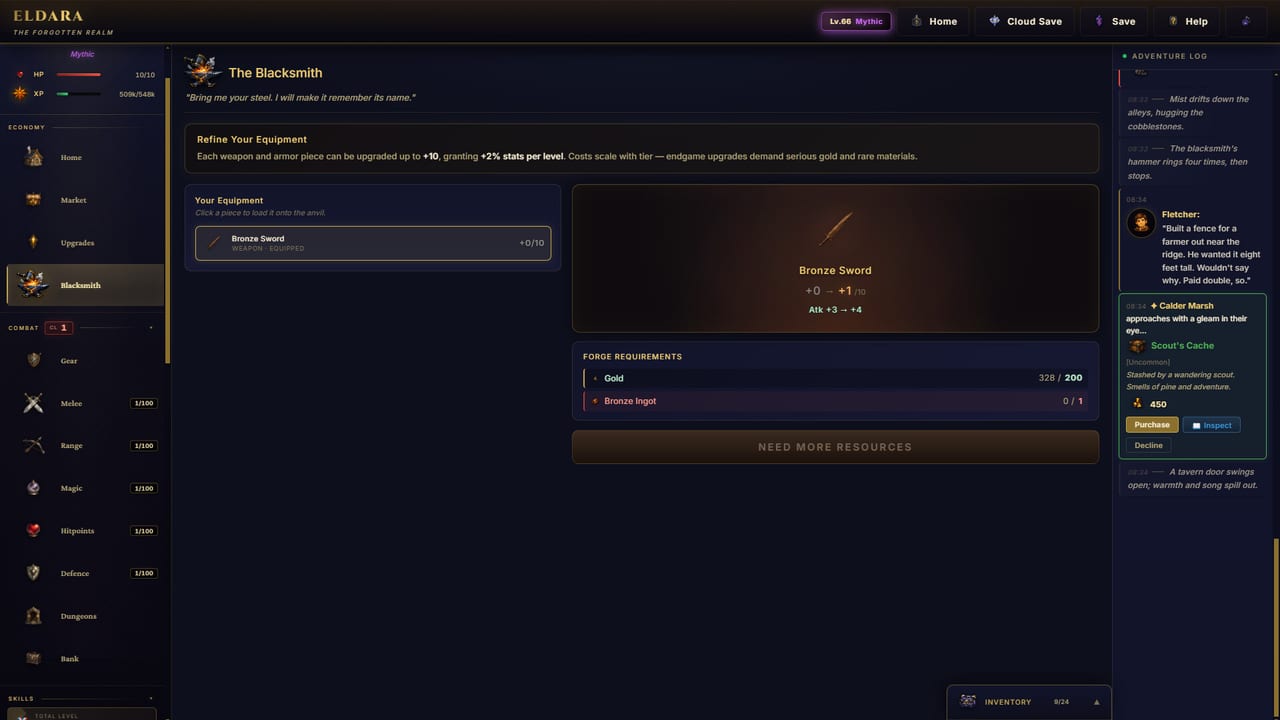
Seventeen skills, but you cannot train them all equally
Eldara has seventeen skills and you cannot push all seventeen at the same speed without diluting your progression. Some skills feed combat directly. Some skills feed the production chain that feeds combat. One skill feeds every other skill simultaneously. This page ranks the skills by practical value so you can make an informed decision about where to put your next idle block.
The full skill map with descriptions, clusters, and pet assignments is on the seventeen-skill explainer. This page is the ranking board.
S-Tier: Skills that change your account
Firemaking — the only universal skill
Firemaking is a global XP accelerator. Burning logs accelerates experience for Mining, Magic, Thieving, and every other skill in the game. This is not a tooltip bug. The studio confirmed it during Early Access and 1.0 did not change the mechanic. Logs you chop are not vendor trash. They are a multiplier on everything else.
Why it is S-tier: Every other skill on this list benefits from Firemaking being lit. A melee character who idles Firemaking still gets bonus XP on Defence and Hitpoints. A gatherer who idles Firemaking still gets bonus XP on Mining and Woodcutting.
When to push it: Always. Keep Woodcutting stocked so Firemaking never starves. Even if you are a dedicated combat save, fire the logs.
Cooking — the auto-eat engine
Combat in Eldara is idle. Auto-eat is the UI that keeps combat running while you are not watching. Cooking produces the food that auto-eat consumes. If you run out of food, your character stops fighting and starts dying.
Why it is S-tier: No food means no idle combat. No idle combat means no hunting contracts, no dungeon runs, and no mythic world boss attempts. Cooking is the gatekeeper for the entire combat cluster.
When to push it: After you have a stable gathering base (Woodcutting, Fishing, Cultivating) and before you commit to a combat style. Never let food reserves hit zero.
A-Tier: Core progression skills
Smithing — the gear refinement engine
Rebirth stamps approximately +5 refinement onto equipped combat gear per cycle (cap near +50). Smithing is how melee characters produce gear worth stamping. A hammer leaning artisan who ignores Smithing is leaving +5 bonuses on the table.
Why it is A-tier: Gear refinement is permanent progression. Pets, Codex, and collections persist through rebirth. Equipment refinement persists through rebirth. Smithing is how you produce the gear that keeps getting better.
When to push it: After Firemaking and Cooking are stable. When you have a combat style selected and want to refine its loadout.
Mining — the underground conveyor
Mining produces ore. Ore feeds Smithing. Smithing produces plates and weapons. Plates and weapons feed combat. High veins want better picks. Offline mining is one of the safest ways to spend eight hours at work.
Why it is A-tier: It is the input side of the production chain that supports the entire combat cluster. A mining save can feed itself, feed Smithing, and still sell surplus ore for early gold.
When to push it: Parallel with Woodcutting in early game. These two gathering skills should be your first idle blocks.
Woodcutting — the surface conveyor
Woodcutting produces logs. Logs feed Firemaking (global XP), Fletching (ammunition), and Crafting (planks). If you only chop and never burn or fletch, you are stockpiling warehouse problems. If you chop and burn, you are running the XP multiplier.
Why it is A-tier: Logs are the raw material for Firemaking, Fletching, and Crafting. A Woodcutting save that burns logs is simultaneously advancing Woodcutting, Mining, Magic, Thieving, and everything else through the Firemaking accelerator.
When to push it: First or second idle block in every build. Keep Woodcutting stocked before you pick a combat style.
Fletching — the ammunition chain
Range cannot fire without arrows. Fletching turns Woodcutting logs into the ammunition that Range needs. A ranger who ignores Fletching is buying arrows from a vendor or going without.
Why it is A-tier: Range is one of the three combat styles. Fletching is the only way to supply Range with ammunition at scale. If you are building a ranged save, Fletching is not optional.
When to push it: When you have selected Range as your combat style and Woodcutting is providing logs.
B-Tier: Important but situational
Melee — the default combat style
Melee is close steel. It eats Smithing output and Hunting trophies. It is the wrong answer to skeletons that resist melee, and a fine answer to anything the Codex marks as weak to plates and mass. One of the three mythic world bosses wants melee.
Why it is B-tier: Combat skills are build-dependent. You pick one style and refine that set. Melee is not inherently better than Range or Magic; it is the style your equipment supports best.
When to push it: When your Smithing output is strong and you have a melee loadout assembled. Not before.
Range — the alternative combat style
Range is the bowline. It eats Fletching, Woodcutting, and a calm backpack of arrows. Dragons fall to arrows. One of the three mythic world bosses wants range.
Why it is B-tier: Same logic as Melee. Range is a style, not a universal answer. Push it when your Fletching and Woodcutting are providing ammunition.
When to push it: When you have selected Range as your combat style and Fletching is producing arrows.
Magic — the third combat style
Magic-based combat progression with crafted implements and a respect for fire. Wraiths fear fire. One of the three mythic world bosses wants magic.
Why it is B-tier: Same logic as Melee and Range. Magic is a style that needs equipment support. Do not push Magic if your Crafting and Firemaking are not producing the implements and food the build needs.
When to push it: When you have selected Magic as your combat style and Crafting is producing implements.
Defence and Hitpoints — survival bars
Defence is the reason a wrong pull is a scare instead of a grave. Hitpoints is the pool auto-eat is trying to keep full. Both rise by taking fights you can survive.
Why they are B-tier: They are not gathering skills with a different icon. They are survival bars that should be high enough to make wrong pulls survivable. They do not need to be maxed before you start combat.
When to push them: When your combat loadout is assembled and you are preparing for harder content. Hardcore players should push these earlier.
C-Tier: Useful but not urgent
Fishing — the Cooking input
Fishing stocks Cooking. Cooking stocks auto-eat. Fishing is only as valuable as your Cooking demand.
Why it is C-tier: It is a support skill for Cooking. If Cooking is already producing enough food, Fishing can wait. If Cooking is starving, Fishing is urgent.
Cultivating — the herb and crop input
Cultivating produces herbs and crops that Cooking and Crafting both want. It is the plant-side twin of Hunting.
Why it is C-tier: Same logic as Fishing. Push it when Cooking or Crafting demand exceeds your current supply.
Hunting — the animal input and contract source
Hunting provides carcasses for the kitchen, hides for Crafting, bones for Cremating, and a natural ally of Ashen Legion. The hunting board is also the source of contracts that pay gold, XP, and points.
Why it is C-tier: Hunting is useful but not urgent in the first week. Take cheap contracts after you have food and a combat loadout. Do not open hunting before Cooking exists.
Crafting — the catch-all bench
Crafting is the catch-all bench: hides, oddments, mage kit, backpack pieces, and the recipes the Codex keeps adding as you discover them.
Why it is C-tier: Crafting is important for long-term progression but not urgent in the first week. Its recipes unlock through discovery and Codex progression. Push it when you have a clear crafting goal.
D-Tier: Late-game or niche
Cremating — the bone economy
Cremating is the bone economy. Combat and Hunting feed it. Its products feed later crafts and niche upgrades.
Why it is D-tier: It matters when you need niche upgrades or dungeon recipes. In the first week, you are not likely to encounter its gate.
Thieving — the odd gatherer
Thieving produces gold and item spikes rather than a clean ore pile. It is not a first-day activity.
Why it is D-tier: It is a mid-save gold tap when you understand catch risk, bag space, and how much you still need for house donations.
Bottom line for a new build
Firemaking first. Woodcutting second so Firemaking never starves. Cooking third so auto-eat has food. Mining and Fishing as gathering support. Then pick your combat style and push the production chain that supports it.
Rebirth keeps pets, Codex, collections, and achievements. The rebirth planner is the checklist before you pull the lever. The pet rankings show which companion to unlock next.
Frequently Asked Questions
Quick answers to the most common questions.
What is the most important skill in Eldara?
Firemaking is the only universal skill. It accelerates XP for every other skill in the game, including Mining, Magic, Thieving, and combat skills. Keep Woodcutting stocked so Firemaking never starves.
Which skills should I push first as a new player?
Firemaking first, then Woodcutting to keep fires lit, then Cooking so auto-eat has food. After that, Mining and Fishing as gathering support, then your chosen combat style.
Do I need to level all 17 skills?
No. Focus on the skills that support your chosen combat style and the production chains that feed it. Diluting across all 17 slows your progression.
When should I start combat skills?
After Firemaking, Woodcutting, and Cooking are stable. Combat without food is a corpse. Combat without refinement is a long grind. Build the foundation first.
Does rebirth reset skill levels?
Yes. Rebirth resets run-based progression including skill levels. Pets, Codex, collections, and achievements persist. Read the rebirth planner before your first prestige.